Artificial Intelligence (AI) has gone through a rapid evolution in the last decade, and we are now in an era where AI is shaping almost every aspect of our lives, from recommendation engines on our favorite streaming platforms to voice assistants on our smartphones. This journey has been powered by significant advancements in machine-learning models. In the present scenario, a specific category of machine learning models, known as Foundational Models (FMs) and Large Language Models (LLMs), has started to gain significant attention. These models are influencing the trajectory of AI research and its impact on society. But what are these models, and why are they considered potentially transformative for AI’s future? Let’s dig in.
What are Foundational Models and Large Language Models?
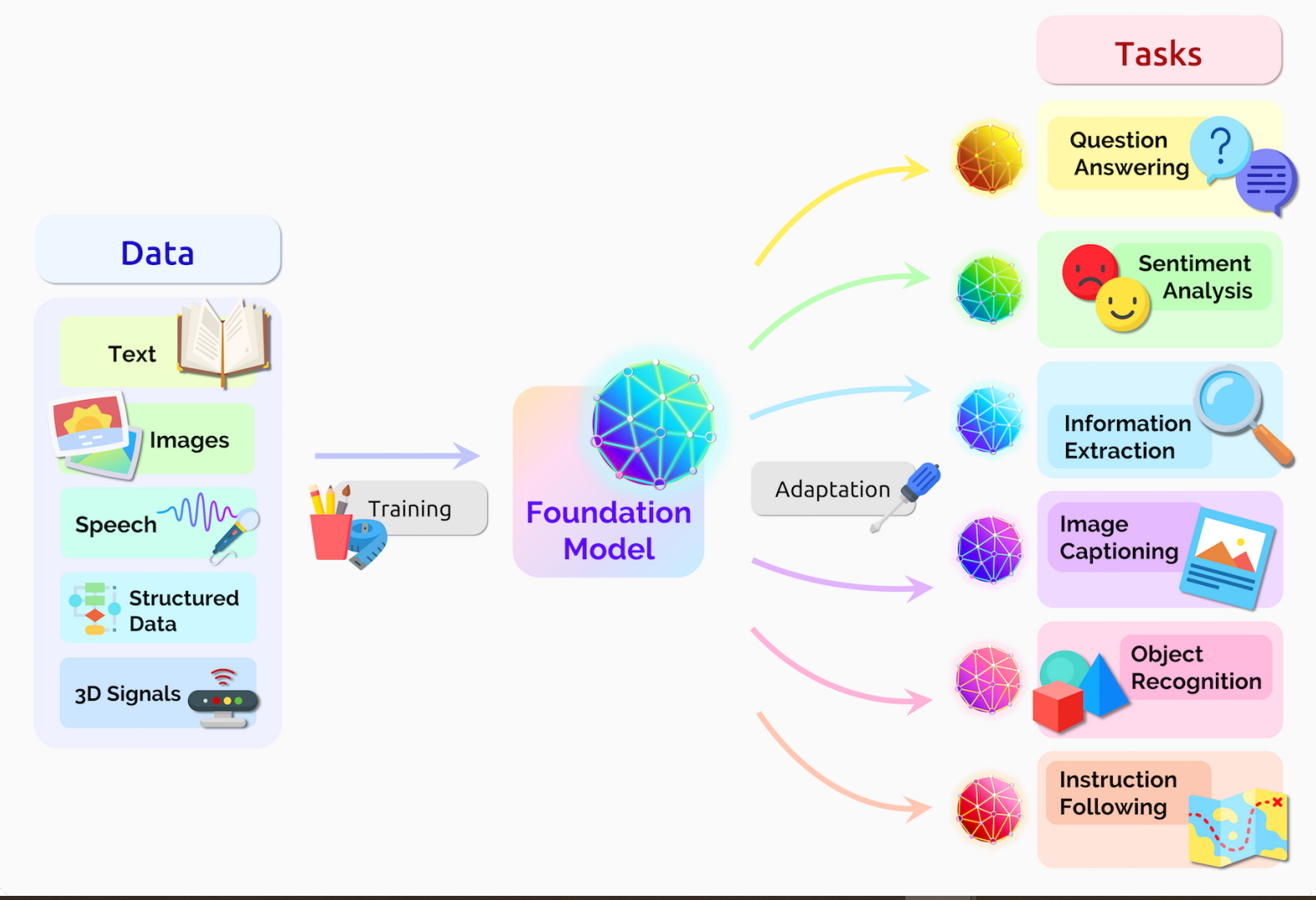
Foundational Models can be described as machine learning models trained on broad data from the internet, which can be fine-tuned for various specific tasks. These models learn to make predictions by observing patterns in the data they are trained on and can then be applied to a wide range of tasks. They can be considered as a foundation upon which more specialized models can be built.
Large Language Models (LLMs), like GPT-3 and GPT-4, are a type of Foundational Model that specifically deals with text data. They are trained on a vast corpus of text data from the internet, learning the intricate patterns of human language. They can generate human-like text and are capable of tasks such as translation, question-answering, and even creative writing.
Why are Foundational Models and Large Language Models important?
The most exciting aspect of FMs and LLMs is their versatility. With a single model, you can perform a wide range of tasks by fine-tuning it on specific tasks. This offers significant advantages over traditional AI approaches where you had to build a unique model for each task. With Foundational Models, you build a base model once and then adapt it to different tasks as needed.
In particular, Large Language Models have demonstrated impressive capabilities in understanding and generating human language. These models can generate remarkably coherent and contextually relevant text, making them useful in applications such as chatbots, content creation, and more.
Moreover, the rise of these models could also lead to cost and time efficiencies in AI development, since fine-tuning a pre-trained model is typically less resource-intensive than training a model from scratch.
The Future of AI with Foundational Models and Large Language Models
The rise of Foundational Models and Large Language Models opens up a world of possibilities in AI. Their ability to understand and generate human-like text could revolutionize industries like customer service, entertainment, and education, among others. Furthermore, their versatility and efficiency make them a promising solution for a wide array of tasks.
However, it’s also important to be cognizant of the challenges associated with these models. Issues like ethical considerations, potential misuse, and the mitigation of biases in the models are areas of active research and discussion in the AI community.
While we are just at the beginning of exploring the full potential of these models, one thing is clear: Foundational Models and Large Language Models represent a significant step forward in our journey to making AI more powerful, versatile, and accessible.
Stay tuned to our series as we delve deeper into how these models are created, fine-tuned, launched, and deployed. The era of Foundational Models and Large Language Models is here, and it’s poised to redefine the landscape of AI as we know it.
 Shameer Notes